

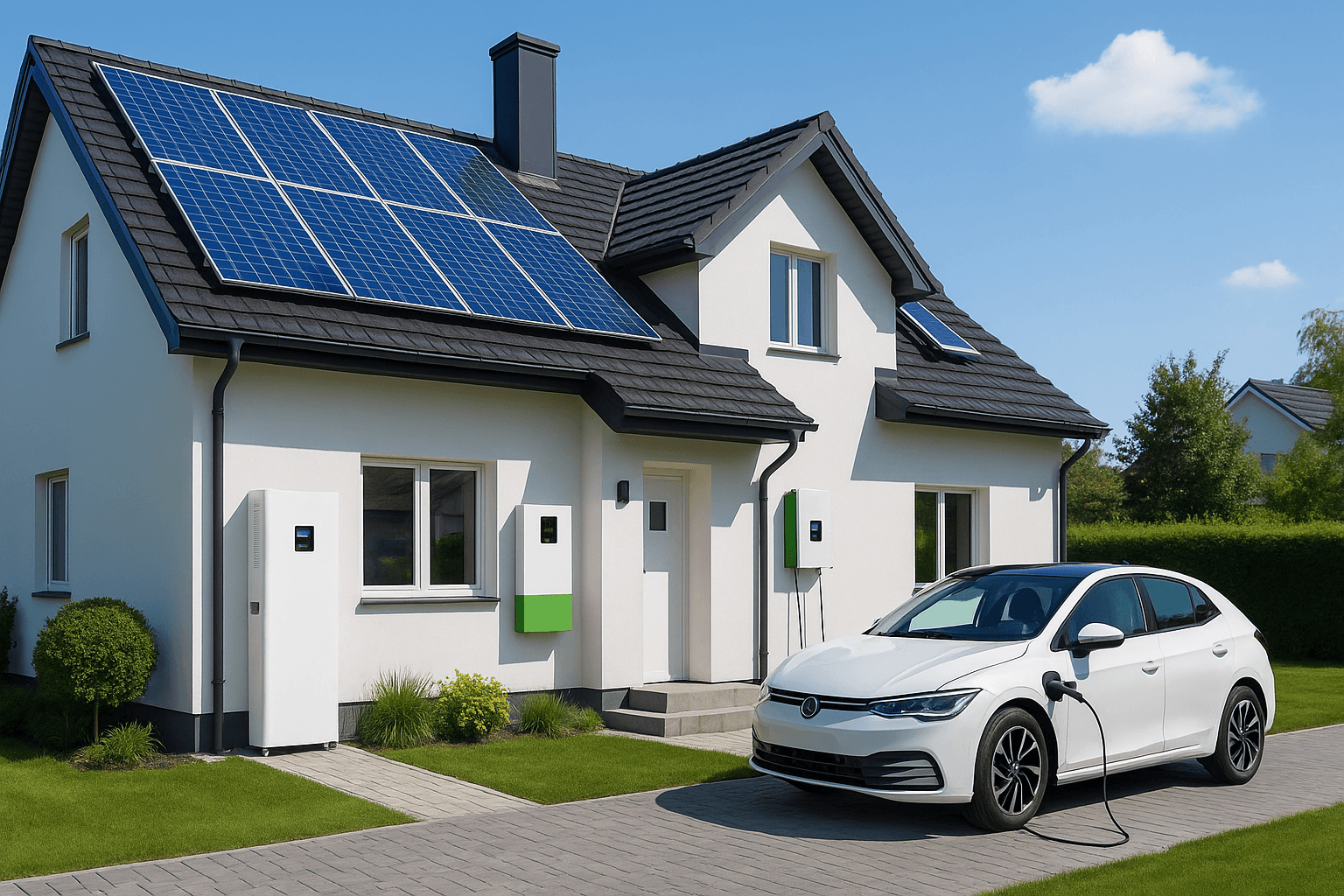
I.Core Value of Home Energy Storage Systems
1. For Users: Cost Reduction, Safety, and Enhanced Comfort
Economy: The “self-generation + self-consumption + surplus storage” model reduces dependence on the grid. In Germany, for example, home PV + storage systems can cut electricity bills by 60%-80%.
Emergency Resilience: During extreme weather or grid outages, storage systems provide 4–24 hours of continuous power, safeguarding critical loads like lighting and refrigerators.
Environmental Impact: Reduces fossil fuel consumption and carbon emissions. A 10kWh home storage system cuts approximately 5 tons of CO₂ annually.
2. Grid-Side: Auxiliary Services and Stability Enhancement
Peak Shaving: Releases stored energy during peak consumption periods to alleviate grid strain. Data from the California Independent System Operator (CAISO) indicates that residential energy storage participating in demand response can reduce regional peak loads by 5%-10%.
Frequency Regulation: Responds to grid frequency fluctuations through rapid charging/discharging to improve power supply quality.
Virtual Power Plant (VPP): Aggregates multiple residential storage resources into a dispatchable distributed energy cluster participating in electricity market transactions.
II. Four Major System Types: Technical Architecture and Application Scenarios
1. Hybrid PV-Storage System
Components: PV modules, lithium batteries, hybrid inverter (integrated MPPT charge controller and bidirectional inverter), smart meter, CT (current transformer).
Technical Highlights:
DC Coupling: Directly charges batteries via DC-DC conversion, reducing energy losses (3%-5% efficiency gain).
Mode Switching: Seamlessly transitions between grid-connected (self-consumption priority, surplus fed-in) and off-grid (standalone power) modes, ideal for unstable grid areas.
Typical Case: Tesla Powerwall 2 + SolarEdge hybrid inverter combination enables full lifecycle management of household energy.
2. Coupled PV Storage System (AC Coupling)
Components: PV modules, grid-tied inverter, lithium battery, AC-coupled storage inverter, smart meter.
Technical Highlights:
Compatibility: Directly integrates storage into existing grid-connected PV systems, reducing retrofit costs by 40%-60%.
Phased Investment: Users can install PV first and expand storage capacity later as needed.
Some regions enhance household energy self-sufficiency through AC-coupled “PV+Storage” projects.
3. Off-Grid PV Storage Systems
Components: PV modules, lithium batteries, off-grid inverters, diesel generators (optional), load controllers.
Technical Highlights:
Fully Autonomous: Delivers power via DC-DC charging or bidirectional DC-AC inversion, suitable for gridless islands and remote mountainous areas.
Multi-energy Complementarity: Integrates diesel generators to form hybrid “PV + storage + diesel” systems for continuous rainy periods.
Case Study: Off-grid systems provide stable power to schools and clinics, replacing costly diesel generation.
4. PV Storage Energy Management System (EMS)
Components: Adds intelligent control systems and cloud platform interfaces to coupled systems.
Technical Highlights:
Dynamic Scheduling: Automatically adjusts charge/discharge strategies based on electricity price signals and weather forecasts to maximize revenue.
Demand Response: Participates in grid peak shaving and frequency regulation services to earn additional subsidies. Example: Australia’s AGL Energy offers users peak-valley arbitrage incentives through home EMS systems.
Case Study: Germany’s SonnenCommunity platform aggregates thousands of household energy storage resources to form a virtual power plant participating in electricity markets.
III. Selection and Configuration: Key Steps from Requirement to Implementation
1. Core Component Selection Guide
Battery Technology Comparison:
Type Energy Density Cycle Life Cost Suitable Applications
Lithium-ion Battery High (150-250Wh/kg) 6,000-10,000 cycles High Daily energy storage, high-power demand
Lead-Acid Battery Low (30-50 Wh/kg) 300-500 cycles Low Backup power, low-frequency usage scenarios
Sodium-Ion Battery Medium (100-150 Wh/kg) 3000-5000 cycles Medium Cost-sensitive large-scale energy storage
Inverter Selection:
Single-phase inverter: Power ≤ 10kW, suitable for standard households (e.g., Huawei SUN2000L-5KTL).
Three-phase inverter: Power ≥ 10kW, supports villas and commercial/industrial loads (e.g., SMA Tripower Storage 10.0).
IV. Typical Application Scenarios & Benefit Analysis (Costs are for reference only; actual charges apply)
1. Urban households: Cost-effectiveness priority
Solution: Hybrid system (5kW PV + 10kWh lithium battery) + single-phase inverter.
Benefits:
Annual electricity savings: Approximately $1,200 (based on California electricity rates).
Payback period: 6-8 years (including subsidies).
2. Remote Areas: Reliability Priority
Solution: Off-grid system (8kW PV + 20kWh lithium battery) + diesel generator.
Benefits:
Replaces diesel generation: Annual fuel savings of $3,000, reducing CO₂ emissions by 12 tons.
System lifespan: Lithium battery 10 years, PV 25 years, with long-term costs lower than diesel solutions.
3. Luxury Villas: Smart Home Priority
Solution: EMS system (10kW PV + 15kWh lithium battery) + three-phase inverter + smart home integration.
Home energy storage systems transcend mere technology—they epitomize the transformation of energy consumption patterns. From reducing electricity bills to participating in grid services, from powering remote areas to building urban “zero-carbon communities,” their application boundaries continue to expand. In the future, as technology matures and policies evolve, home energy storage will become a core component in constructing smart grids and achieving carbon neutrality goals.

